

Peru: Archaeological field school
Gain hands-on experience at a real archaeological excavation site
Study abroad in Peru
Looking for a study abroad program where you can do real archaeology (...and not just read about it)?
Join an active archaeological research project in the Andean foothills of southern Peru and gain hands-on field experience while earning academic credit.
This immersive archaeology study abroad program places you at Cerro Mejía, an ancient settlement that reveals how people lived, migrated and adapted within powerful Andean empires more than 1,300 years ago.
Excavate an ancient Andean community
Between 600 and 700 CE, a multi-ethnic colony was established at Cerro Mejía on the frontier shared by two powerful ancient states: Wari and Tiwanaku. Families were relocated from across the Moquegua Valley and distant provinces as part of a Wari-sponsored colony.
Today, archaeologists are excavating the remains of these settlers’ homes to understand:
Daily life in this colony
How they adapted to unfamiliar environments
What changed and what endured under Wari imperial rule
As a student participant, you become part of this research.


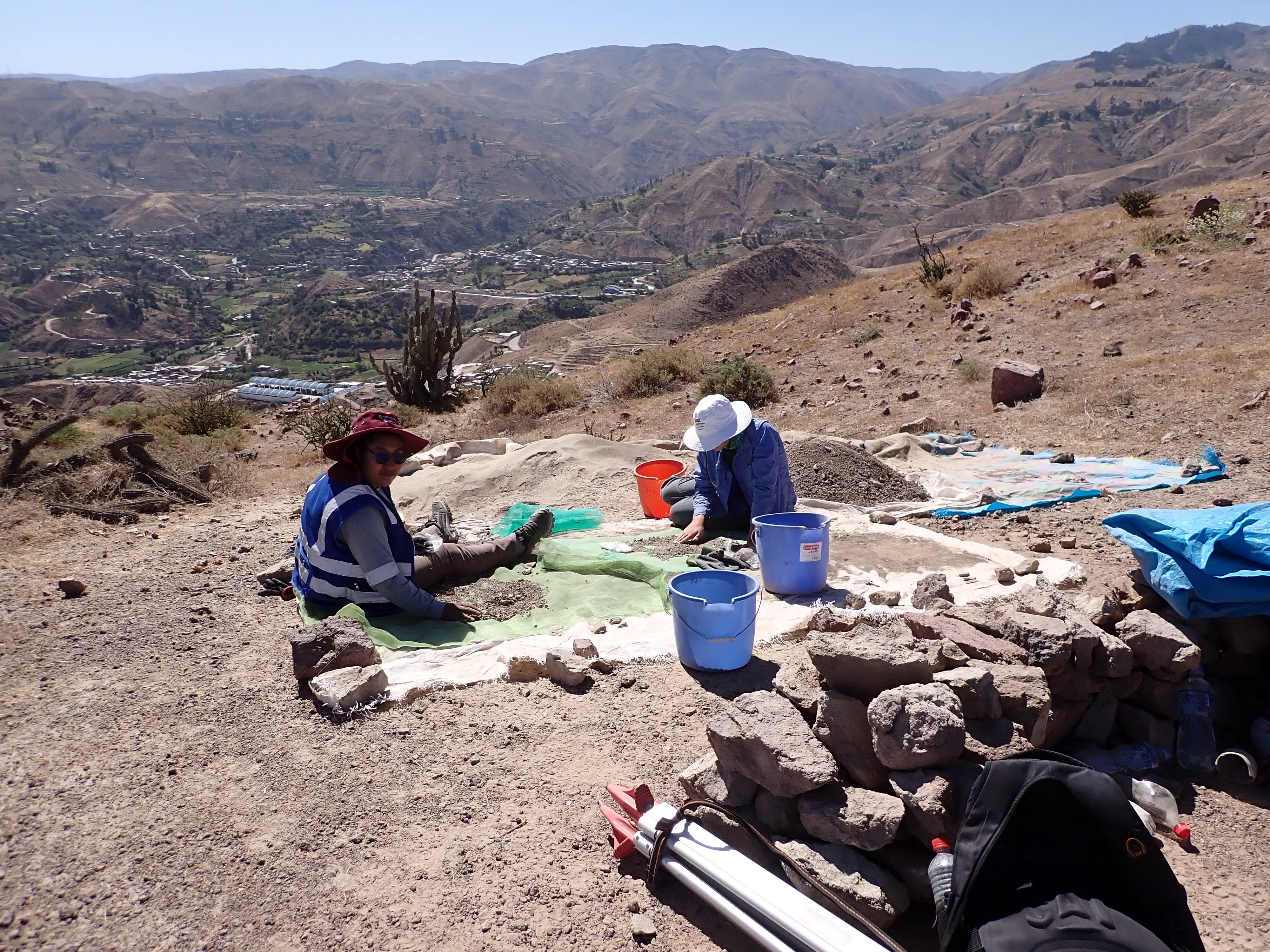

What you'll gain:
Earn 6 credits during the 5-week program
Learn mapping, survey and excavation techniques
Aspects of preliminary artifact analysis
Unique cultural experiences, including working with indigenous Aymara speakers
Preparation for a career in cultural resources management
Memories to last a lifetime
Limited spots available!
This opportunity is also open to non-ASU students. For information on how to apply as a non-ASU student, please click here.
Learn more about the Peru field school:
Research on the Wari presence in the upper Moquegua Valley has unfolded over nearly three decades through collaborative work by Peruvian and North American scholars. Early investigations clarified that Cerro Baúl and its neighboring sites were part of the southernmost expansion of the Wari Empire, overturning earlier interpretations that attributed the site to Tiwanaku. Systematic mapping, survey, and excavation since the 1990s have revealed a carefully planned colonial landscape anchored by Cerro Baúl, supported by irrigation canals, agricultural infrastructure and surrounding settlements such as Cerro Mejía and Cerro Petroglifo.
Long-term excavations have documented clear differences between elite spaces on Cerro Baúl, including a palace complex, brewery and ritual architecture, as well as the diverse domestic neighborhoods of Cerro Mejía. Household archaeology, artifact analysis and regional survey demonstrate substantial variation in material culture, craft production and daily practices, suggesting that the colony was socially and ethnically diverse. Together, these decades of research provide a detailed picture of how the Wari state organized labor, managed resources and sustained imperial authority on a distant frontier.
Cerro Mejía is the largest Wari residential settlement in the Moquegua colony, located beside Cerro Baúl and integrated into an extensive agricultural landscape. The site includes a wide range of residential areas, production zones and ceremonial spaces, reflecting its role as a key population center within the colony. Residential sectors are divided by large walls into distinct neighborhoods, where differences in household architecture and vessel forms suggest meaningful social diversity among residents.
Cerro Mejía is organized into two main residential zones: the summit of the hill and the terraced southeastern slope facing Cerro Baúl. An irrigation canal runs along the slope, separating homes from agricultural fields and anchoring a large public processing area equipped with grinding stones. Nearby workshops and fire features indicate craft activities such as ceramic production or copper processing, while monumental stairways connected Cerro Mejía to Cerro Baúl, reinforcing their close functional relationship.
The summit of Cerro Mejía features substantial residential complexes, elite architectural forms, and a central plaza complex used for public ceremony and administration. Together, the site’s layout, infrastructure and architectural diversity highlight the social complexity and organizational sophistication of the Wari presence in Moquegua.
Donna Nash, PhD

Donna Nash is an associate professor and anthropological archaeologist in the School of Human Evolution and Social Change. Her research focuses on the Wari Empire of prehistoric Peru. Prior to coming to ASU, she served as the chair of the anthropology department at the University of North Carolina at Greensboro. She is also the adjunct curator of anthropology at the Field Museum in Chicago.
Donna Nash received her Ph.D. from the University of Florida and has been conducting archaeological research in Peru since 1993. Nash examines how leaders in early states established and maintained their power. In particular she studies how buildings were designed for specific activities and recently has focused on palaces and the houses of elite members of society to understand how the lives of the powerful were different from other members of society. Her research looks specifically at the Wari Empire (AD600-1000) and their settlement in the Moquegua region of southern Peru (Osmore River drainage), having excavated at the sites of Cerro Baúl and Cerro Mejía. Investigations in Moquegua have been supported by funding from the National Science Foundation, National Geographic Society, Heinz Foundation, Curtiss T. and Mary G. Brennan Foundation, the Field Museum, the University of Florida, and the University of North Carolina Greensboro. Nash has written a number of reports detailing her finds, published book chapters and articles, and
presented her research at a number of conferences.
Ryan Williams, PhD

Patrick "Ryan" Williams is a professor and director of the School of Human Evolution and Social Change at Arizona State University. For two decades, he has served as curator of archaeological science and director of the Elemental Analysis Facility at The Field Museum of Natural History in Chicago, Illinois, where he also served on the graduate faculties of the University of Illinois at Chicago and Northwestern University. Williams curated the South American Anthropology collections at the Field, and has worked with several Native American artists in building that collection. He has also curated several traveling exhibits, including "Death: Life’s Mystery, Maps: Finding our Place in the World, and Mummies: Images of the Afterlife." Educated at Northwestern and the University of Florida, Williams served on the faculty of Boston University before joining the Field, where he served as chair of anthropology, associate director for research, and head of social sciences for over a decade.
Williams has authored more than 80 publications, has been awarded 10 federal senior research grants, and directs a multidisciplinary international archaeological research program around the site of Cerro Baúl in Southern Peru.
Research on Cerro Mejía has trained many students in archaeology. Since 2008, a formal Archaeological Field School has been offered to students of the University of Illinois Chicago, Northwestern University, Ripon College, The University of North Carolina Greensboro and many others. The program is now based out of Arizona State University, but remains open for participants from other universities.