
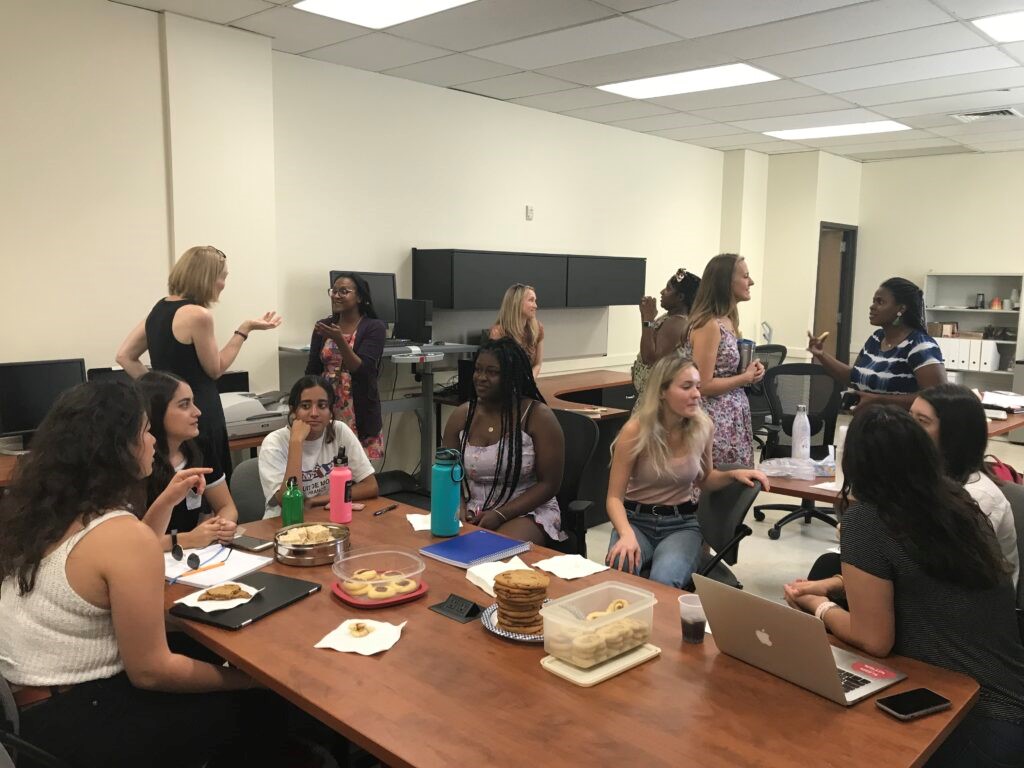
The CHELab is dedicated to research and student training in rigorous, cutting-edge social research methods to innovate and advance research at the intersection of culture, health, environmental and linguistic research.
Up to 40 in-person and online undergraduates join the lab each semester as research apprentices, gaining data management, analysis and collaborative skills. Many more work with us in the field with us or in our practicum courses learning about social science by direct involvement in our active research projects.
CHELab Leadership
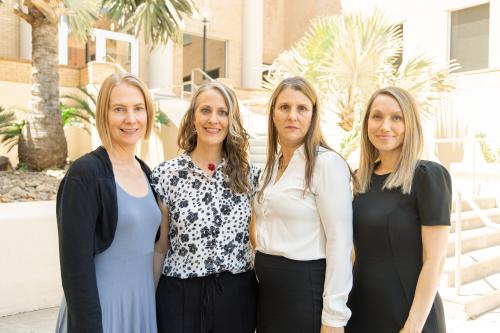
The core CHELab leadership team have themselves collaborated intensely and productively for many years (from left to right - linguistic anthropologist Cindi SturtzSreetharan, educational anthropologist Alissa Ruth, biocultural/biological anthropologist Alexandra Brewis, and cultural anthropologist Amber Wutich) producing more than a dozen books and several hundred research articles published together and with their students. They embrace team-collaboration, work efficiently, hold each other to the highest standards, innovate approaches constantly, and value what everyone brings to the table.
CHELab invites scholars, postdocs and graduate students from any field to get involved in any of ongoing projects, and office and lab space is available for sabbatical visitors. Contact any of the core faculty to find out more.
Undergraduate students are invited to apply to work with us through our organized training programs:
Undergraduate Research Experiences
ASB 455 Social Research Training (SoRT)-CHELab (3 credits)
Students interested in joining the CHELab should apply to complete the 7.5-week intensive ASB 455 Social Research Training (SoRT) program that provides hands-on training in qualitative and cross-cultural data collection and analysis. Offered during A session in fall and spring semesters, students learn how to employ high-quality, systematic research methods, including research ethics, research design and sampling, interviewing, and the foundations of qualitative data analysis (theme identification, codebook creation, and coding). Core to the focus of the training is learning team science and collaborative research, and as such, students are required to engage with other SoRT students through weekly online meetings and discussions. Students who complete the SoRT are invited to apply in subsequent semesters to work with lab faculty on ongoing projects.
ASB 484 Culture, Environment, and Health Laboratory (1-3 credits)
Students who have completed the ASB 455 SoRT are invited to apply to return to the lab during the fall or spring C sessions. Returning students continue their research training by learning how to use qualitative data analysis software and transitioning to work on ongoing projects. Participation is flexible, allowing students to enroll in variable credit depending on their availability. Students who continue in the lab may participate in data collection (interview and survey), data management (cleaning, transcription), codebook development, and coding. Excelling students may also have the opportunity to present data at research conferences as part of a collaborative team.
How to Apply
All ASU students, online and immersion, are encouraged to apply via the School’s Research Apprenticeship Program [scroll to the bottom to the “apply” link]. Students are notified within two weeks of whether they are accepted and given instructions on how to enroll.